The back story
Fire, silk and oarlocks: shopping in Venice, the back story
Glass since 1291, velvet on hand looms, hats made to measure: in Venice you buy from the maker.

Photo Credit
Image courtesy of © Ewald Ehtreiber · CC BY-SA 4.0 via Wikimedia CommonsVenice’s best shopping is not a high street but a set of workshops that never closed. The glass furnaces sent to Murano in 1291 still burn; wooden looms still weave silk velvet; a hat shop in Calle del Lovo still makes every hat by hand. Here is how the city’s trades became its shops, from a lawyer’s mosaics on Regent Street to a bookshop that floods, and why buying in Venice still means buying from the maker.
Glass, sent away for safety
In 1291 the Great Council made it final: the glass furnaces would leave the city centre to avoid the risk of fire, and Murano became the island of glass. Some family names there have outlasted the Republic that sent them. Barovier&Toso dates its blown glass to 1295 and still works on the Fondamenta dei Vetrai, every piece, it says, mouth-blown and handmade; Seguso counts 23 generations of glassmakers, father to son, since 1397.
Salviati has a lawyer to thank. Antonio Salviati, a lawyer from Vicenza in love with the mosaics of San Marco, founded his firm in Dorsoduro in 1859, and its mosaics travelled to London, where one still decorates the façade of the Apple Store on Regent Street. Production moved to Fondamenta Radi on Murano in 1959, and it is still there.
Its breakthrough came at the first Murano glass exhibition in 1864, where a monumental mosaic won a prize above the gold medal, and its mosaics went on to the Houses of Parliament and the Paris Opéra. In September 2026 Salviati returned to Piazza San Marco, under the Procuratie Vecchie, with a chandelier designed by Norman Foster. It is a long way from a fire regulation to a Foster chandelier, but Murano has had seven centuries.
Velvet and printed light
Venice’s other great craft is cloth. At Tessitura Luigi Bevilacqua, the family says, it has woven for three centuries on wooden hand looms, and it keeps two historic shops in the city, which, it notes without false modesty, the best of the press sends visitors to see. Its silk velvets and brocades are the kind of cloth that makes a good sofa look under-dressed.
Fortuny, established in 1921, calls its Giudecca works the last operating factory in Venice, and colours its printed fabrics with techniques it describes as secret, passed down for generations. Rubelli, another Venetian house, makes fabrics, wallcoverings and furniture. Between them they make Venice the rare city where the curtains have a pedigree.
Small trades, sharp tools
The smallest shops keep the oddest trades alive. Giuliana Longo, a Locale Storico Veneto in Calle del Lovo, makes hats of every kind, from gondoliers’ hats to Panamas and Carnival pieces; its trips to Ecuador for Panama hats now run, the shop says, to more than twenty years, recorded in hand-made folding books in a technique typical of seventeenth-century Venice.
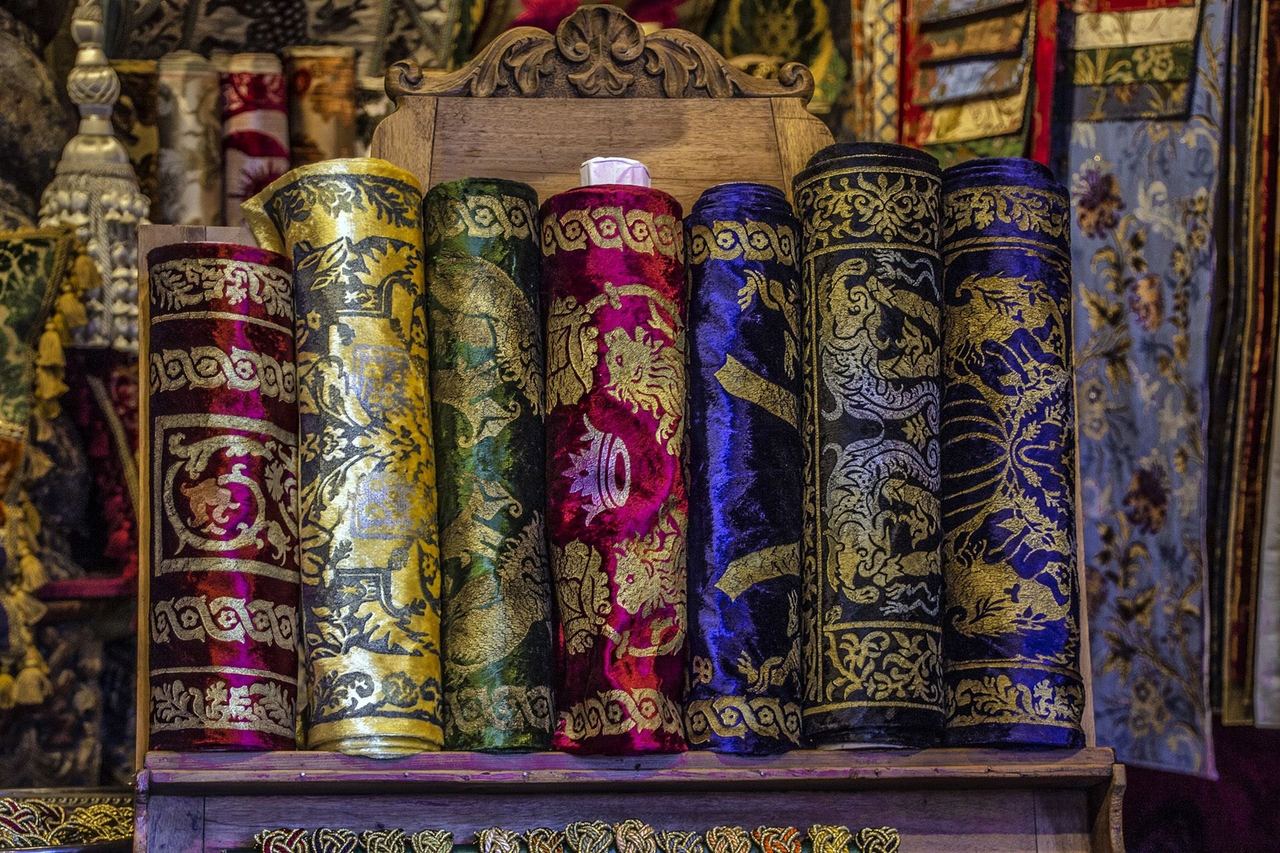
Photo Credit
Image courtesy of © Tessitura Luigi BevilacquaNear the Peggy Guggenheim Collection, Saverio Pastor carves fórcole, the sculpted oarlocks on which Venetian rowers pivot their oars, and the oars themselves, with scale models for those of us without a boat. In San Polo, Tragicomica makes masks and costumes for Carnival and the stage.
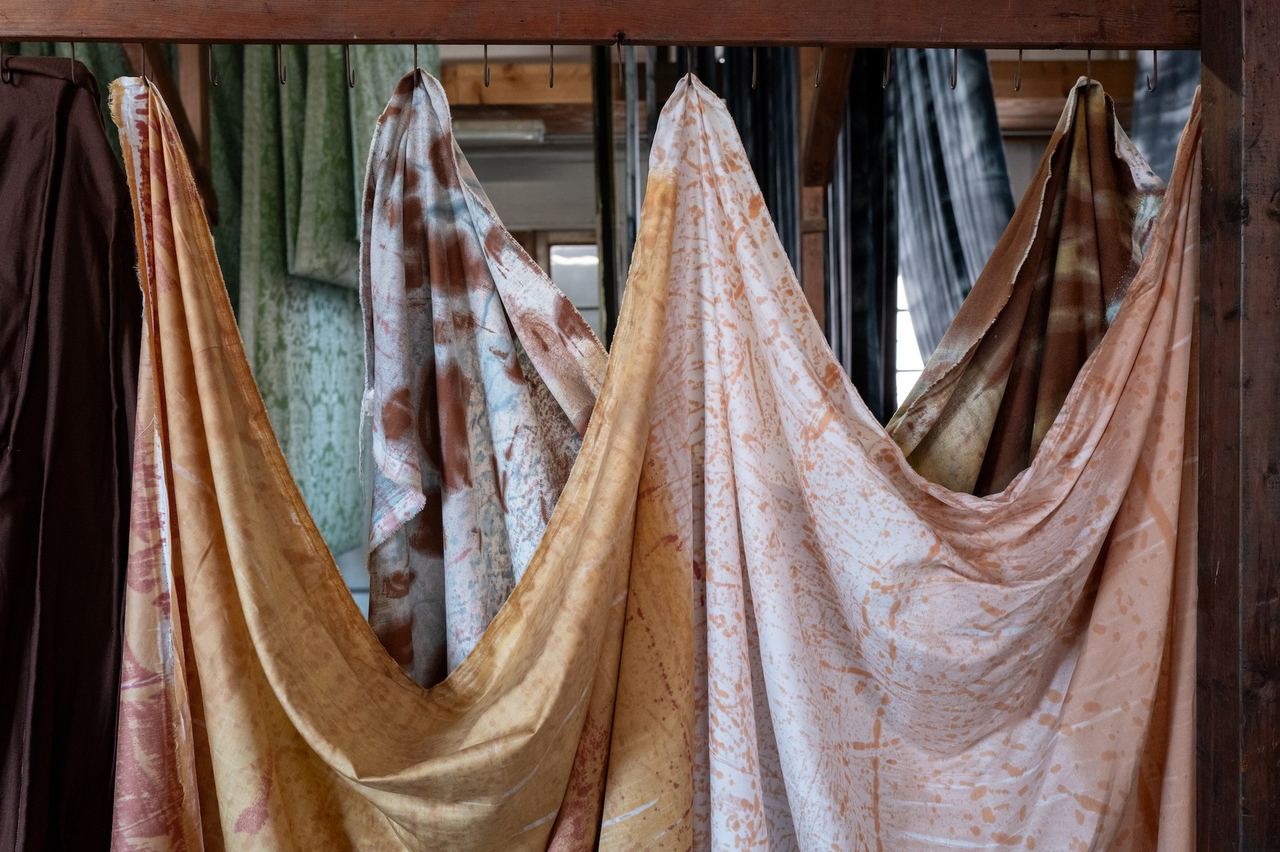
Photo Credit
Image courtesy of © FortunyThen there is Libreria Acqua Alta, open since 2002, which has turned the city’s floods into a filing system. Books wait in gondolas and on ledges, cats keep an eye on the stock and, in its own words, the occasional high water floods the shop.
It is a long way from a fire regulation to a Foster chandelier, but Murano has had seven centuries.
Streets and markets
For fashion, the Calle Larga XXII Marzo runs west from Piazza San Marco towards Santa Maria del Giglio, lined with fashion houses. For food, go to the Rialto markets at the San Polo end of the bridge: the Erberia sells fruit and vegetables, the Pescaria the lagoon’s fish under its arcaded hall. Go in the morning; the fish do not wait for late risers.
Our advice: buy glass on Murano from the houses’ own showrooms and ask where each piece was made; if Murano is not on your route, Seguso has a shop at Dorsoduro 723, near the Guggenheim. Visit Bevilacqua or Fortuny with time to look rather than to hurry, go to the Rialto before lunch, and leave room in the case for a hat.
Why it's on our list
- Glass, sent away for safety
- Velvet and printed light
- Small trades, sharp tools
- Streets and markets
Location
The map comes from Google Maps, which sets its own cookies once it loads.
More in depth
 The back storyPiani nobili and island houses: buying in VeniceWhere people buy in Venice, and how buying works in Italy.
 Coming soonComing soon: the tech the makers have promisedOfficially announced tech, from Gemini glasses to Meta's VR specs, plus the newest arrivals.
 CompareAirPods Pro 3 vs the rest: noise-cancelling earbuds comparedAirPods Pro 3 against AirPods 5, Sony WF-1000XM6 and Bose QuietComfort Ultra Earbuds.