Objects of Desire
All oars, no engines: Venice’s beautiful machines
The Regata Storica, the 30 km Vogalonga, the carved fórcola and where to learn to row in Venice.
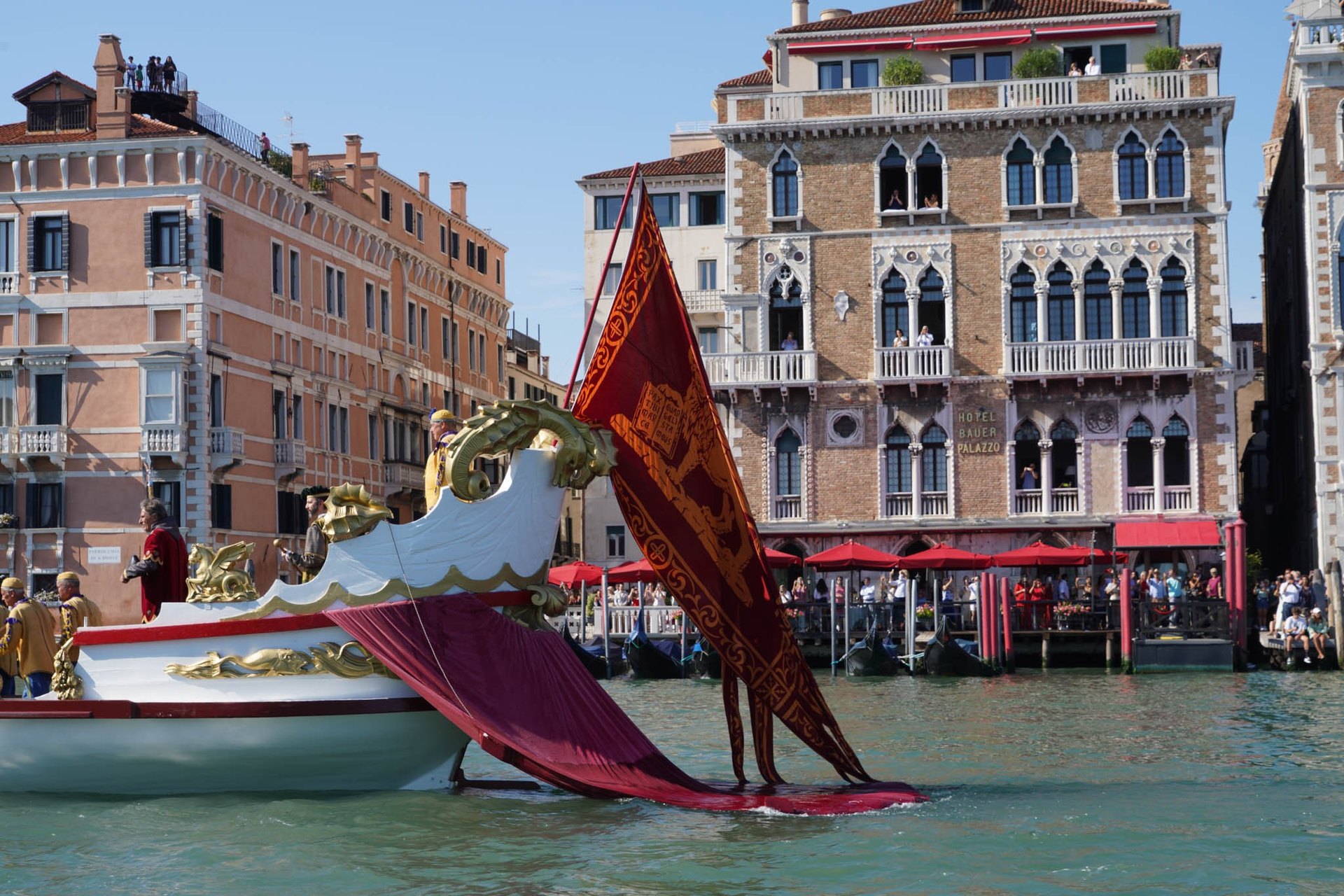
Photo Credit
Image courtesy of © Regata StoricaWhat does a city with no cars do with its love of beautiful machines? Venice puts it on the water. Its racing gondolini have competed since 1841, the Vogalonga sends thousands of rowers 30 kilometres round the lagoon, and its oarlocks are carved like sculpture. Here is how to watch, and how to take an oar yourself, checked against the regatta’s, the clubs’ and the makers’ own pages in November 2026.
A city with no cars
Venice has no showroom of sports cars and no ring road to drive them on. Its beautiful machines float. The historic centre allows no cars, bicycles or scooters, as La Fenice reminds its audiences: the last stops for wheels are Piazzale Roma and the Tronchetto. Everything beyond moves by hull, by engine or, most handsomely, by oar.
The oar is the city’s great precision instrument. A Venetian rower stands, faces forward and pivots the blade on a fórcola, the sculpted oarlock. Saverio Pastor carves fórcole and oars in his workshop near the Peggy Guggenheim Collection, and sells scale models to those who will never own a gondola. On the walls they look less like boat parts than like small abstract sculptures.
The engines have their place. The Consorzio Motoscafi Venezia runs water taxis around the city, across the lagoon and to the airport 24 hours a day, and a varnished launch cutting across the Bacino is as close as Venice comes to a grand tourer. The gondola, meanwhile, waits at its stations: agree the time and the fare before you step aboard, and the oar does the rest.

Photo Credit
Image courtesy of © Jsamwrites · CC BY-SA 4.0 via Wikimedia CommonsThe Grand Prix of the Grand Canal
The Regata Storica is held every year on the first Sunday of September; the next is on 5 September 2027. It opens with the Corteo Storico, a parade along the Grand Canal of historic boats with costumed crews, gondolas and the city’s rowing clubs, and then the racing begins. Its two-oared gondolini have raced 131 times between 1841 and 2022, for a red flag that only 86 rowers have ever won.
More than a thousand crews took part in those gondolino races, and 264 rowers won at least one flag. Of the 86 who took the red, 21 won it more than twice, which in Venice is the nearest thing to a racing dynasty.
Women race too, on two-oared mascarete, a contest the regatta records from 1953. The boats have names that sound like a menu at a smart bacaro: pupparin, mascareta, caorlina, gondolino. Each has its own shape and its own race, and the crowds along the Grand Canal know the difference.
It is the one traffic jam in Europe that people enter on purpose.
Thirty kilometres, no winner
The Vogalonga is the opposite of a race. Its own description calls it an act of love for Venice and the water around it: a 30-kilometre, non-competitive row through the lagoon, its islands and the Grand Canal, open to any boat moved by oars, with no limit on size, weight or crew. It began, the organisers say, to promote boats that do not churn the water and to protect the city from wave damage.
The 50th Vogalonga set off on 24 May 2026. Organisers count some 8,000 rowers in 2,000 boats a year, of every shape and from every corner of the world. It is the one traffic jam in Europe that people enter on purpose.
Learning the stroke
The Reale Società Canottieri Bucintoro, at the Magazzini del Sale on the Zattere, has rowed since 1882 under the motto “Senz’ali non può”, without wings it cannot, and teaches voga veneta, rowing and sailing al terzo. For visitors, Row Venice, a non-profit of women instructors, gives private lessons in traditional batela boats from the Fondamenta near the Sacca della Misericordia, including a Cichetto Row that stops at a bacaro or two.
Our advice: book a Row Venice lesson early in your stay, so the rest of the trip makes more sense from the water, cross the Grand Canal standing on a traghetto at least once, and plan a September visit around the Regata Storica. A water taxi is quicker, but nothing beats the oar for understanding how this city was built to move.

Photo Credit
Image courtesy of © Godromil · Public domain via Wikimedia CommonsWhy it's on our list
- A city with no cars
- The Grand Prix of the Grand Canal
- Thirty kilometres, no winner
- Learning the stroke
Location
The map comes from Google Maps, which sets its own cookies once it loads.
More in depth
 Objects of DesireTwice from the ashes: how Venice learned to listenLa Fenice’s brief for eye and ear, two fires, Vivaldi at the Pietà and Florian’s orchestra.
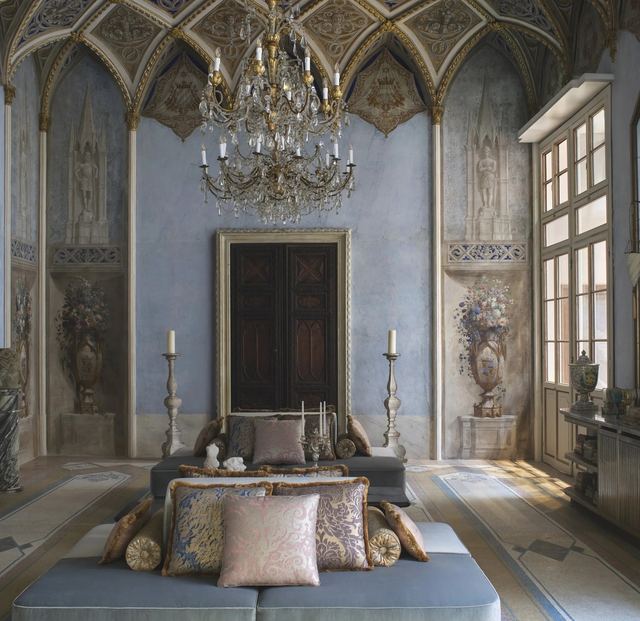 Objects of DesireOld walls, new keys: the palaces rebornPalazzo Donà Giovannelli, Palazzo Papadopoli and the Giudecca: how Venice’s palaces became hotels.
 Objects of DesireA painter in every glass: the Bellini and its relationsThe IBA’s Bellini, the Rossini, Puccini and Tintoretto, and the Venice bars that pour them.