The back story
Medicine, then manners: Venice’s cafés, the back story
From coffee as medicine to Florian’s salons: how Piazza San Marco became Venice’s drawing room.
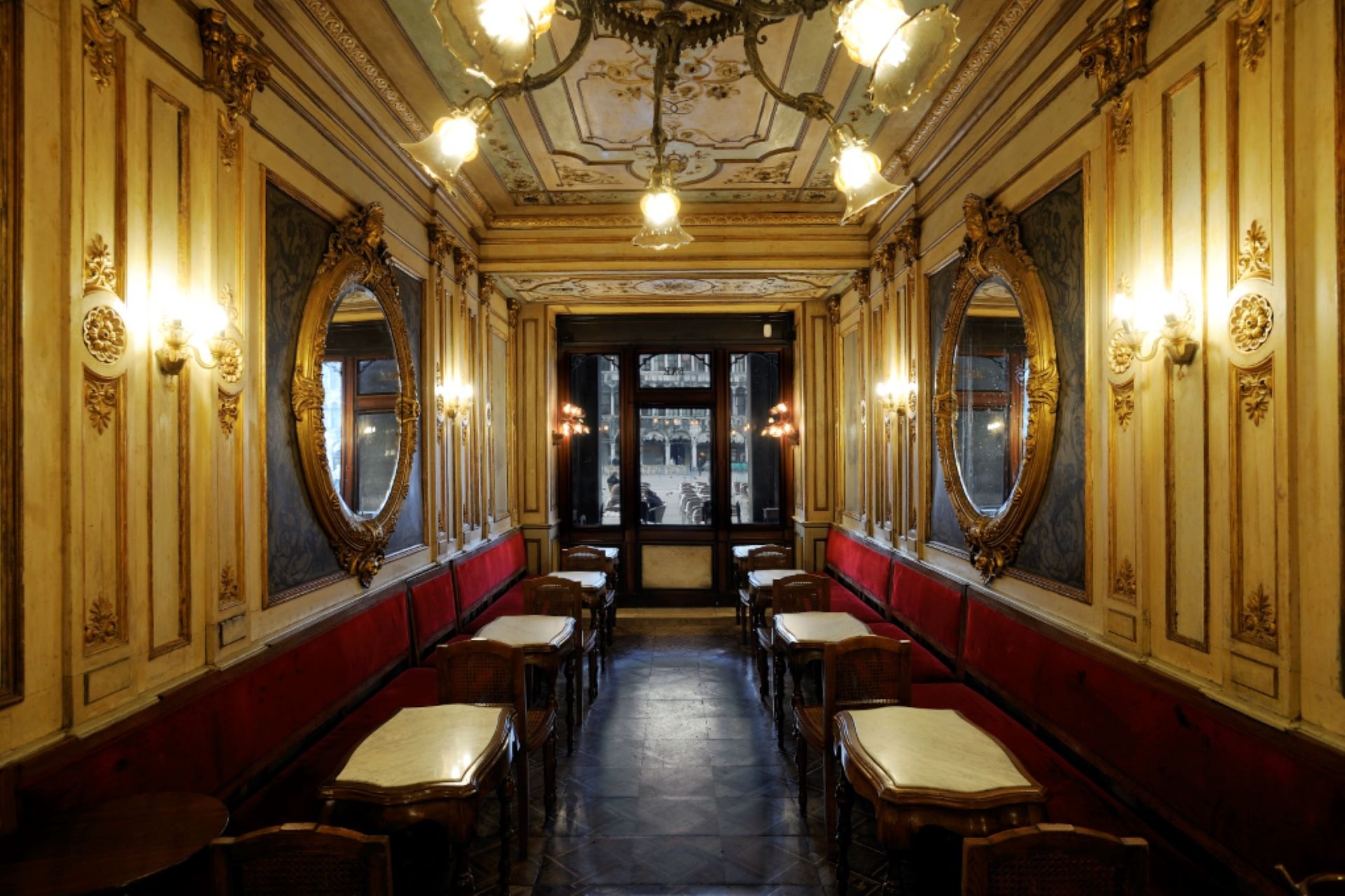
Photo Credit
Image courtesy of © Caffè FlorianCoffee reached Venice as a costly medicine and became a ritual within a century. The first coffee shop opened on Piazza San Marco in 1683, in Caffè del Doge’s telling; Florian followed in 1720, Lavena in 1750 and Quadri’s Turkish coffee in 1775. Here is how one square became the city’s drawing room, who sat in it, and why a coffee under its arcades is still as much theatre as drink.
From the pharmacy to the piazza
Coffee reached Venice by sea and was taken, at first, as a remedy. Caffè del Doge, the roaster by the Rialto, sets out the story in its own history: a Venetian ambassador in Constantinople described the drink in a report to the Senate in 1585, and papers from the early 1600s show coffee as very expensive and prized as a medicine, brewed as an infusion of roasted, powdered beans.
By the end of that century the habit had outgrown the apothecary: in 1683, by the same account, the first coffee shop opened on Piazza San Marco, and dozens followed. In 1750 Carlo Goldoni staged La bottega del caffè, a comedy set in a coffee shop; by 1802 Antonio Lamberti called the café the house of people of all classes and ages, gossip in the groups, risky games in the corners. The gambling, at least, has moved on.
Florian, under the arcades
Caffè Florian opened on 29 December 1720, founded by Floriano Francesconi under the grand name Alla Venezia Trionfante, “Triumphant Venice”. Venetians, the café says, soon shortened it to Florian, after the man behind the counter. It still calls itself the oldest café in Italy, and its painted, mirrored salons under the Procuratie Nuove were fully restored in the mid-nineteenth century.
Three centuries on, the formula has barely moved: narrow salons of gilt mirrors and red velvet banquettes, and in season an orchestra on the piazza outside. Taking coffee here feels like sitting inside a jewellery box that happens to have a view of a basilica.
Lavena and the composer
Across the square, at the foot of the Clock Tower, Caffè Lavena dates from 1750. Venetians of the time, the café says, knew it as the Caffè dei Foresti, the foreigners’ café. Carlo Lavena took it over in 1860 and drew in a circle of artists and musicians, Richard Wagner among them.
Wagner was a regular from his first visit to Venice, often spending the late afternoon in conversation with Lavena, usually with his gondolier, Luigi, in tow. The eighteenth-century mirrors have survived intact, and the glass chandelier in the loggia is by the Murano masters Barovier and Toso, hung with Moors’ heads. Somewhere outside, presumably, the gondola waited with the meter running.
Florian and Quadri still face each other across the square like two dowagers at a ball, each quite certain the other arrived later.
Quadri’s Turkish gamble
Gran Caffè Quadri, on the Procuratie Vecchie side, has the longest memory of all. In 1638, its owners say, the premises opened as Il Rimedio, selling Malvasia wine believed to revive body and spirit. On 28 May 1775 Giorgio Quadri and his wife Naxina, from Corfu, bet on the exotic appeal of Turkish coffee, and the café took their name.
The Vaerini brothers added a restaurant upstairs in 1830; the Alajmo family took over in 2011 and in 2018 began a deep transformation of the rooms, designed by Philippe Starck. Florian and Quadri still face each other across the square like two dowagers at a ball, each quite certain the other arrived later.
Beyond the square
Away from the piazza, Venice drinks its coffee faster. Caffè del Doge opened its first coffee bar in Venice on 5 September 2003, and now pours in Calle dei Cinque by the Rialto, in the building where its beans were once roasted. Its Doge Rosso blend is roasted origin by origin and then blended cold, in what it calls the Venetian tradition. On the Giudecca, Harry’s Dolci, founded in 1981, opens seasonally from spring to autumn.
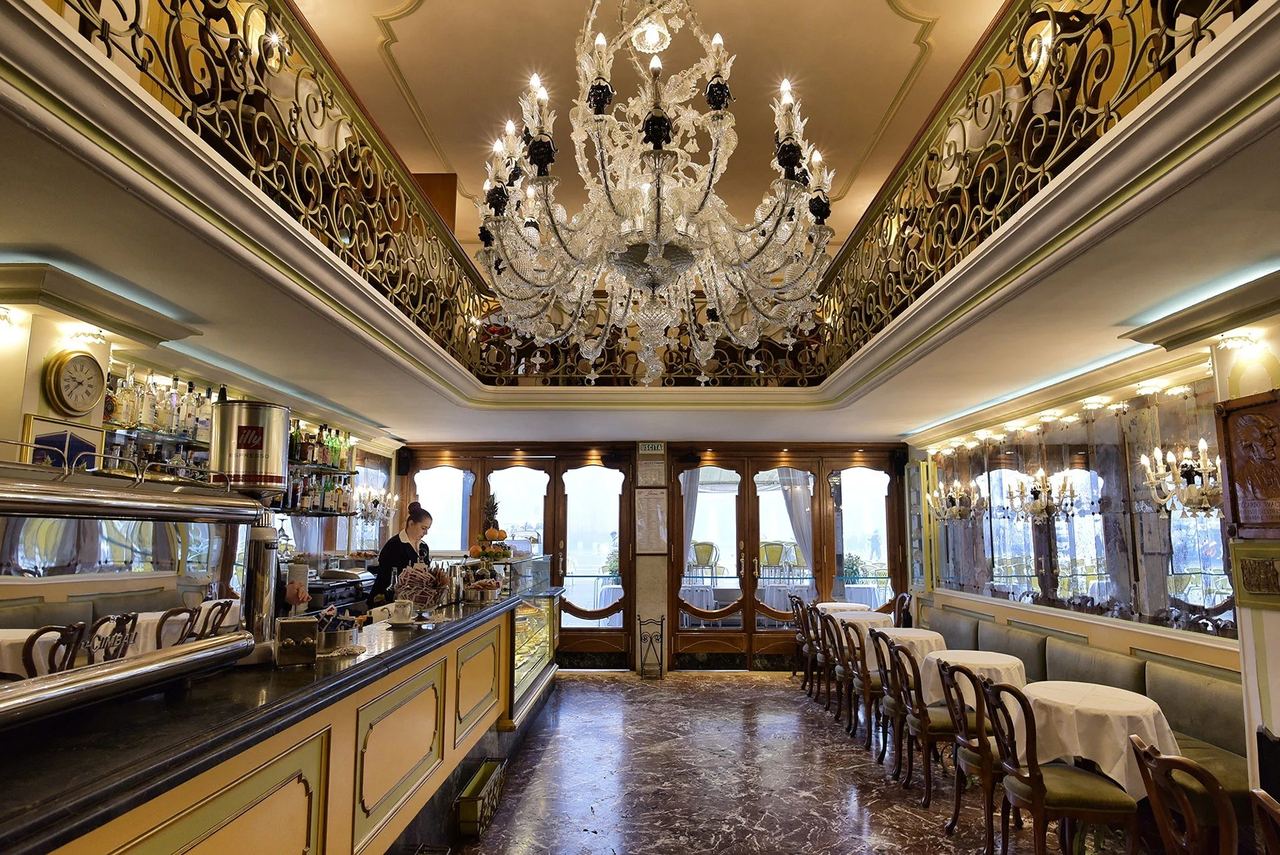
Photo Credit
Image courtesy of © Caffè LavenaOur advice: take your first coffee standing at a bar near the Rialto, with something sweet from Majer, a self-styled pasticceria storica that also sells its own coffee beans, and save Florian, Lavena or Quadri for the late afternoon, when the light on the square softens and the piazza has room to breathe. A table there is a seat in the city’s oldest drawing room; drink slowly.
Why it's on our list
- From the pharmacy to the piazza
- Florian, under the arcades
- Lavena and the composer
- Quadri’s Turkish gamble
Location
The map comes from Google Maps, which sets its own cookies once it loads.
More in depth
 The back storyStanding room only: Venice’s bars, the back storyFrom the bacaro counter to Harry’s Bar and the Bellini: how Venice learned to drink on its feet.
 The back storyPalaces on the Grand Canal and island retreats: the grand hotels of VeniceGrand Canal palaces to island retreats: where to stay.
 The back storyA city built on the water: Venice and its lagoonA city built on water, UNESCO-listed since 1987.